
How Pelvic Floor Therapy Improves Bladder, Bowel & Sexual Function

Most people meet their pelvic floor only when something goes wrong with it. A sneeze that leaks. A trip to the bathroom that never quite finishes. Pain during sex, or an erection that fades faster than it used to. These problems feel unrelated, so they get sent to three different specialists, each treating their own piece.
They are not three problems. They are usually one muscle group behaving badly in three places, and that group is more commonly a culprit than most people realize. About one in four women in the United States lives with at least one pelvic floor disorder, according to national survey data published by the National Institutes of Health, and men have the same muscles and many of the same problems. This article explains what pelvic floor therapy is, why a single set of muscles has so much say over your bladder, bowel, and sex life, and what treatment actually does to bring all three back under control.
What is Pelvic Floor Therapy
Pelvic floor therapy is a specialized form of physical or occupational therapy that treats the muscles, nerves, and connective tissue at the base of your pelvis. A trained therapist assesses how these muscles contract, relax, and coordinate, then uses hands-on techniques, targeted retraining, and a home program to correct the dysfunction driving your symptoms.
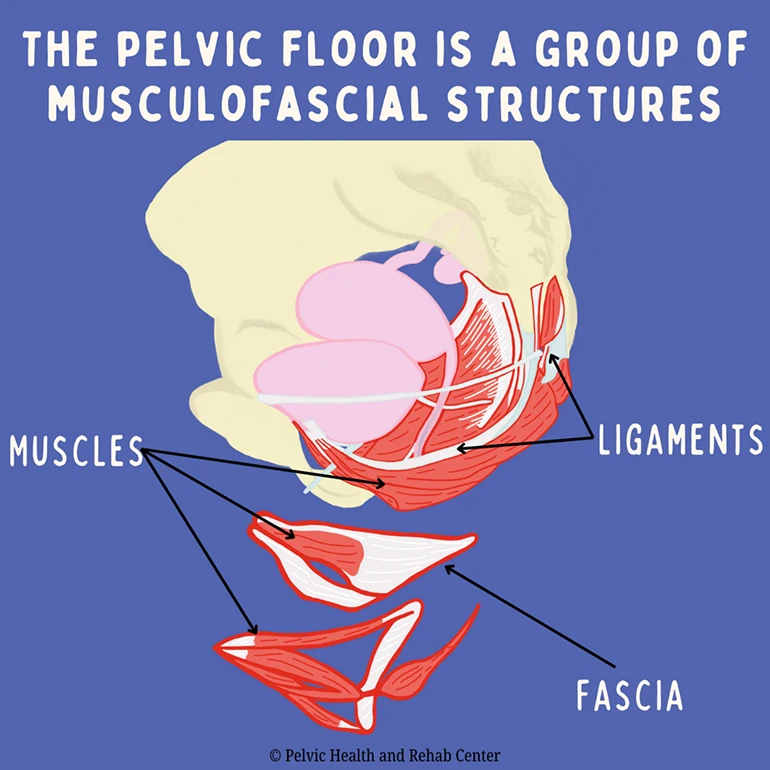
Those muscles form a hammock from your pubic bone to your tailbone. They hold up your bladder, bowel, and, in women, the uterus, and they wrap around the openings you use to urinate, pass stool, and have sex. When they work well, you barely notice them. When they are too tight, too weak, or poorly coordinated, the fallout shows up in all three systems at once.
Why One Muscle Group Controls Bladder, Bowel, and Sex
Here is the piece most articles skip, and it is the reason generic advice so often fails. Pelvic floor problems come in two opposite flavors, and they need opposite treatment.
An overactive pelvic floor is too tight and cannot fully relax. It tends to cause urinary urgency, a slow or incomplete stream, constipation and straining, and pain during sex. A weak or underactive pelvic floor cannot generate enough support or squeeze, which leads to leaking with coughs and jumps, a sense of heaviness, and reduced sensation. A third group has muscles strong enough but firing at the wrong moment, which is a coordination problem.
This is why the popular fix, doing more Kegels, only helps a weak floor and can make a tight one worse. Getting clear on the symptoms of pelvic floor dysfunction before you start any routine is what keeps you from training the wrong patterns. A real benefit of pelvic floor therapy is that it begins with that diagnosis, so the plan matches the actual problem instead of guessing.

How Pelvic Floor Therapy Improves Bladder Control
Bladder symptoms are the most common reason people land in a pelvic floor clinic, and they run in both directions. Some people leak. Others feel a sudden, urgent need to go and cannot make it in time. Both can trace back to the same muscles.
For leaking, therapy rebuilds the strength and timing of the muscles that close the urethra, so they brace automatically the instant you cough, laugh, or lift. The evidence here is strong. In a Cochrane review of women with stress incontinence, those who did supervised pelvic floor muscle training were roughly six times more likely to report cure or improvement than women who received no treatment, about 74 percent versus 11 percent.
Urgency is often the reverse problem. An overactive floor keeps signaling the bladder to empty, and calming that signal matters more than strengthening it. For that pattern, learning ways to relax an overactive pelvic floor usually does more than any squeeze exercise. Once the muscle can release on command, the constant false alarm from the bladder tends to quiet down, and the trips between bathrooms stretch back out.
How Pelvic Floor Therapy Improves Bowel Function
The same hammock controls the back door. Straining to pass stool, a feeling that you never fully empty, and bowel urgency or leakage are pelvic floor issues as much as digestive ones.
A common and overlooked cause of chronic constipation is a floor that clenches when it should open. The person pushes harder, the muscle grips tighter, and nothing moves. Therapy uses biofeedback to retrain that reflex, and the results are hard to argue with: in a University of Iowa trial, biofeedback corrected the faulty muscle pattern in about 79 percent of people with this type of constipation, compared with only 8 percent from standard care. Some patients also find that a few targeted stretches for short, tight pelvic floor muscles speed things along between visits. The aim is a floor that lengthens on cue, not one that is simply stronger.
There is a quality-of-life payoff that rarely makes it into a symptom list. People who have organized their mornings around an unpredictable bowel often get their spontaneity back, and that is a benefit worth naming out loud.
How Pelvic Floor Therapy Improves Sexual Function
Sex is where pelvic floor dysfunction gets the least airtime and causes some of the most distress. The mechanics are straightforward once you see them. Arousal, sensation, and, in men, erections all depend on the same muscles moving blood and coordinating pressure in the pelvis.
For women, a tight or guarded pelvic floor can make penetration painful or impossible, while weakness can dull sensation and make orgasm harder to reach. Manual therapy releases the tight tissue, retraining restores control and awareness, and pain usually eases as the muscle learns to let go.
For men, the connection to erections is direct and often missed. Tight, weak, or uncoordinated muscles can interfere with the blood flow and nerve signaling an erection depends on, which shows up as difficulty getting or keeping one, reduced sensation, or pelvic pain. The numbers back the approach: in a randomized trial of 55 men, 40 percent regained normal erectile function, and another 35 percent improved after a few months of pelvic floor exercises, with no drugs or surgery. This is the mechanism PHRC targets with pelvic floor therapy for erectile dysfunction, a program that combines muscle retraining, manual and nerve work, and circulation-focused treatment. For the right patient, fixing how the muscles work addresses the cause instead of masking it, which is why pelvic floor therapy for men has grown well past its old reputation as a women-only treatment.
What Treatment Actually Involves
People delay care because they imagine the worst, so it helps to know what happens during pelvic floor therapy before you walk in. The first visit is an evaluation, not a workout. Your therapist takes a detailed history, watches how you move and breathe, and, with your consent, assesses the pelvic floor muscles directly to see whether they are tight, weak, or misfiring. Nothing is done without your permission, and the pace is yours to set.
From there, a personalized plan is built from the tools that fit your pattern. At PHRC, that can include pelvic floor muscle retraining, hands-on manual therapy, nerve and spine treatment, hip and core rehabilitation, work to improve circulation, and lifestyle adjustments, all reinforced by a home exercise program you can actually keep up with. The home piece is where most of the progress compounds between visits.
Most patients come in once or twice a week for roughly 12 weeks. Many notice the first shifts within a few weeks, with the durable changes settling in over that fuller course. How long pelvic floor therapy takes to work depends on how long the problem has been building and how consistent you are at home, and honest clinicians will tell you that up front rather than promising an overnight fix.
How to Choose the Best Pelvic Floor Therapy for Your Situation
Not all programs are equal, and the label on the door does not tell you much. The best pelvic floor therapy for a bladder, bowel, or sexual concern comes from a clinician with specific pelvic health training, not a general therapist adding it as a side offering.
Look for a provider who performs a thorough internal and external evaluation rather than handing everyone the same Kegel sheet, who can explain whether your floor is overactive or weak, and who treats the whole system, including your hips, core, nerves, and circulation, instead of the muscle in isolation. A plan that looks identical to the one the last patient received is a warning sign. Your provider should build your plan around your findings and your goals.
Bladder leaks, bowel struggles, and sexual difficulties are common; they are connected more often than people realize, and they respond to treatment that targets the muscles underneath all three. That is the approach the team at PHRC builds every plan around, starting from an honest assessment of whether your floor is overactive, weak, or simply mistiming its contractions. Matching the treatment to the pattern is what turns a general diagnosis into results you can actually feel.
Frequently Asked Questions
How do I know if I need pelvic floor therapy?
Common signs include leaking with a cough, laugh, or workout, sudden urgency, chronic constipation or straining, a feeling of heaviness or incomplete emptying, and pain or reduced function during sex. If one or more has lasted more than a few weeks, an evaluation can tell you whether your pelvic floor is the driver.
Is pelvic floor therapy painful or awkward?
It should not be painful. The internal assessment is gentle, fully explained, and always done with your consent, and you can pause or decline any part of it. Most patients say the visit is far less uncomfortable than they feared, and a good therapist works at a pace you control.
Can men benefit from pelvic floor therapy?
Yes. Men have the same muscle group, and pelvic floor therapy for men addresses urinary symptoms, pelvic pain, and sexual concerns, including erectile dysfunction driven by muscle tightness, weakness, or poor coordination.
Can pelvic floor problems come back after therapy?
They can if the underlying habits return, which is why a good program ends with a maintenance routine rather than just discharging you. Keeping up the home exercises, along with the breathing and bathroom habits you learn, is what protects the results long term.
Does insurance cover pelvic floor therapy, and what does it cost?
Coverage varies by plan and location, and many insurers do cover it when it is medically necessary, often with a referral. The best thing to do is to call and verify your exact benefits before you begin, so you will not be surprised.